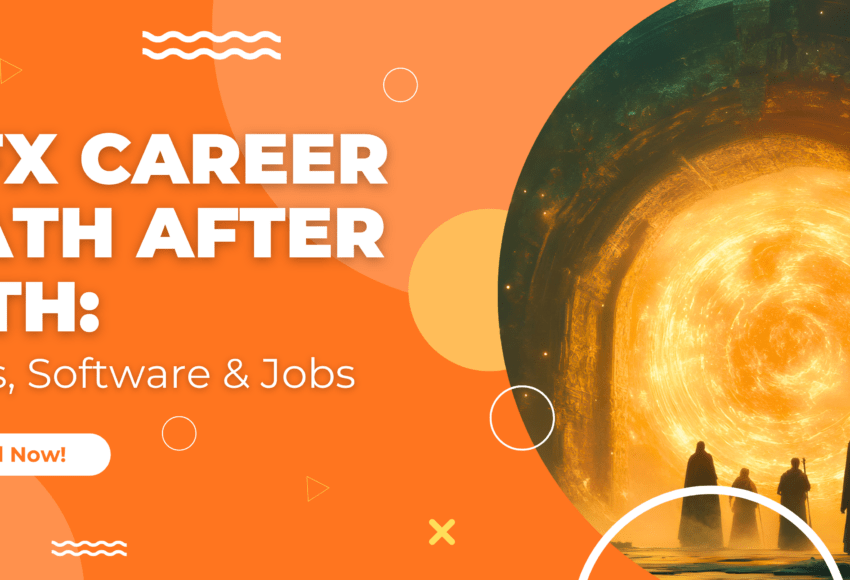
VFX Career Path After 12th: Skills, Software & Jobs
Visual Effects (VFX) is becoming one of the most in-demand careers in the film, media, and gaming industry. Bollywood films, Hollywood productions, web series, commercials, and video games all rely heavily on skilled VFX professionals.
If you have completed your 12th standard and are interested in visual effects, you are entering a field that offers creative freedom, strong salaries, and global career opportunities.
Understanding VFX career requirements, software tools, job roles, and growth opportunities will help you make the right decision for your future in this fast-growing industry.
What Is VFX and Why It’s Popular
VFX stands for Visual Effects. It refers to technology used to create or enhance moving images digitally.
For example:
- Explosions in superhero movies
- Magical spells in fantasy films
- Alien creatures in science fiction
- Large-scale destruction scenes
All of these are created using VFX technology.
The industry is expanding quickly because:
- Bollywood films increasingly rely on VFX
- Hollywood studios outsource projects to India
- Advertising agencies need VFX for commercials
- The gaming industry requires VFX artists
This rapid growth creates huge demand for skilled professionals.
Another reason people choose VFX is the earning potential and global opportunities. Senior artists earn strong salaries, freelancers work on international projects, and the work itself is highly creative.
VFX Career Path After 12th
You can start your VFX career immediately after completing 12th by enrolling in a VFX course or learning through professional training platforms.
Year 1: Foundation Learning
The first 6–12 months usually focus on building fundamentals.
You will learn:
- Basics of VFX and digital art
- Industry workflows
- Introduction to VFX software
- Basic animation and design principles
Most beginner programs take 6 months to 1 year.
Year 2: Software Mastery
The next stage focuses on mastering professional tools.
During this phase you should:
- Learn advanced software skills
- Work on small practice projects
- Begin creating portfolio pieces
This phase usually takes 6–12 months.
Year 3: Internship and Industry Exposure
After gaining software knowledge, you should aim for internships with VFX studios.
Internships help you:
- Work on real projects
- Understand studio pipelines
- Build professional connections
- Expand your portfolio
A strong portfolio should include 10–15 high-quality projects.
Year 4 and Beyond: Professional Roles
After gaining experience, you can start working as a Junior VFX Artist.
Within 2–3 years, many professionals progress to mid-level roles as they specialize and gain experience.
Important Technical Skills for VFX Artists
VFX professionals need a mix of technical knowledge and creative ability.
3D Modeling
This involves creating digital objects, environments, and characters using software such as Maya, Blender, or 3ds Max.
Texturing and Shading
Texturing adds color and surface detail to objects, making them look realistic.
Animation
Animation brings characters and objects to life. It requires understanding movement, timing, and physics.
Lighting and Rendering
Lighting simulates how light interacts with objects in a scene. Rendering converts the 3D scene into the final visual output.
Compositing
Compositing combines different visual elements into a single final shot. This is usually done using tools like After Effects or Nuke.
Motion Graphics and Effects
Motion graphics involve creating animated titles and graphics. Particle systems simulate fire, smoke, water, rain, and explosions.
Creative Skills
Technical knowledge alone is not enough.
Successful VFX artists must also develop:
- Visual storytelling ability
- Color theory understanding
- Strong composition sense
- Extreme attention to detail
Essential Software for VFX
Learning the right tools is critical for building a career in VFX.
Maya
Maya is the industry standard for animation and VFX. Most professional studios worldwide use it.
Blender
Blender is a powerful free software with professional capabilities. It is an excellent starting point for beginners.
3ds Max
3ds Max is widely used in gaming and VFX production.
Adobe After Effects
After Effects is the industry standard for motion graphics and compositing.
Nuke
Nuke is used for advanced compositing in high-end film production.
Houdini
Houdini specializes in procedural effects like explosions, destruction, smoke, and fluid simulations.
ZBrush
ZBrush is used for detailed digital sculpting, especially for characters and creatures.
Rendering Engines
Rendering tools like Arnold, V-Ray, and RenderMan convert 3D scenes into final cinematic images.
VFX Specialization Options
VFX is a large field with multiple specialization areas.
3D Modeling Artist
Creates digital objects, environments, and characters.
Annual salary: ₹4,00,000 – ₹12,00,000
Animator
Animators bring characters and objects to life through movement.
Character animation is a highly specialized and well-paid skill.
Compositor
Compositors combine multiple visual elements into the final scene.
Annual salary: ₹5,00,000 – ₹15,00,000
Motion Graphics Artist
Creates animated graphics and titles for films, advertisements, and digital content.
FX Artist
FX artists create complex effects like fire, smoke, water, explosions, and destruction.
This is one of the highest-paying VFX specializations.
VFX Supervisor
Supervisors lead teams and manage production pipelines. These roles command the highest salaries in the industry.
VFX Salary in India
VFX salaries depend on experience and specialization.
Entry-Level VFX Artists
Beginners earn approximately ₹3,00,000 – ₹5,00,000 per year.
Common roles include:
- Junior animator
- Junior compositor
- Junior modeler
Mid-Level Professionals
With 2–5 years of experience, professionals earn around ₹5,00,000 – ₹10,00,000 per year.
Experienced VFX Artists
Professionals with 5–8 years of experience earn ₹10,00,000 – ₹20,00,000 annually and may mentor junior artists.
Senior VFX Professionals
Senior artists with 8+ years of experience can earn ₹20,00,000 – ₹50,00,000 per year, especially in leadership roles.
Freelance VFX Income
Freelancers work on project-based contracts.
Typical earnings include:
- Small animation projects: ₹50,000 – ₹2,00,000
- Film or large projects: ₹5,00,000 – ₹50,00,000
International projects often pay significantly higher.
Best Institutes and Learning Platforms
Many institutes offer VFX training programs in India.
Popular options include:
- AAFT (Asian Academy of Film and Television)
- MAAC (Maya Academy of Advanced Cinematics)
- ISAC (International School of Animated Cartoon)
- Arena Animation
Online platforms also offer excellent training:
- Udemy
- Coursera
- LinkedIn Learning
- YouTube tutorials
Courses range from 3 months for basics to 2 years for advanced programs.
Job Opportunities for VFX Artists
VFX professionals work in multiple industries.
Film and Web Series Production
Bollywood and regional cinema regularly hire VFX artists.
International VFX Studios
Many global studios outsource work to India, creating opportunities for higher-paying projects.
Advertising Agencies
Commercial advertisements frequently use VFX for creative storytelling.
Gaming Industry
Game development studios require VFX artists for character effects, environments, and gameplay visuals.
E-Learning and Digital Media
Educational platforms, content creators, and startups increasingly use VFX to produce engaging video content.
Freelancing Opportunities
Many VFX artists work remotely with clients worldwide, handling multiple projects simultaneously.
How to Build a Strong VFX Portfolio
Your portfolio is the most important factor in getting hired.
Focus on quality rather than quantity.
Create projects such as:
- Short animation clips
- Visual effect scenes
- Title sequences
- High-quality 3D renders
Include 8–15 strong projects demonstrating your technical and creative skills.
Use professional platforms to showcase your work:
- ArtStation
- Behance
- Vimeo
Update your portfolio regularly as your skills improve.
VFX Career: A Creative Future
A VFX career offers exciting opportunities for creative professionals who enjoy technology and storytelling.
With the rapid expansion of film production, gaming, advertising, and digital media, the demand for skilled VFX artists continues to grow.
If you start learning after your 12th and build a strong portfolio, you can enter this industry within a few years and build a successful career.
The key is simple: learn the right tools, practice consistently, create strong projects, and keep improving your skills.