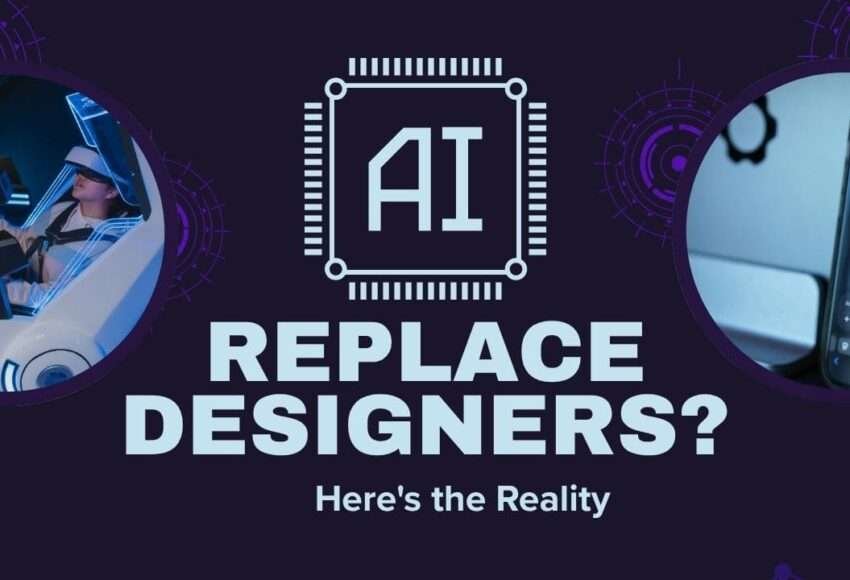
Will AI Replace Designers? Here’s the Reality
Artificial Intelligence (AI) has become the buzzword of the decade — transforming industries, redefining workflows, and reshaping creativity itself. From generating realistic art to designing complete websites in seconds, tools like Midjourney, Figma AI, and Adobe Firefly are proving how powerful automation has become.
But this rapid progress has also sparked one big question:
👉 Will AI replace human designers?
The short answer is — No, AI won’t replace designers completely.
However, it will change the way designers work forever. Let’s dive into why AI is both a tool and a transformer — not a total replacement — for the world of design.
1. AI Can Create Designs — But Not Understand Them
AI can generate logos, banners, and UI mockups in seconds. It can analyze user preferences and even suggest color palettes or layouts based on trends.
However, design isn’t just about visual aesthetics — it’s about emotion, culture, and storytelling.
For example:
- An AI can create 50 versions of a landing page, but it doesn’t understand which one aligns with your brand voice.
- It can design a logo, but it doesn’t feel the message you want your audience to experience.
💡 AI is excellent at patterns, but human designers are masters of purpose.
A successful design goes beyond rules and algorithms — it connects emotionally. That’s something no AI can replicate (at least not yet).
2. Designers Who Use AI Will Replace Those Who Don’t
The real shift isn’t “AI vs Designers,” but rather “Designers with AI vs Designers without AI.”
AI-powered design tools are making workflows faster and smarter:
- Figma’s AI assistant can generate layouts instantly.
- Canva Magic Studio can remove backgrounds or expand images with one click.
- Adobe Firefly can create stunning mockups using simple text prompts.
These tools don’t replace designers — they empower them.
Instead of spending hours resizing images or manually adjusting fonts, designers can focus on creative direction, storytelling, and strategy — the parts of design that require human intuition.
In 2025 and beyond, AI won’t take your job — but a designer who understands AI might.
3. AI Handles Repetition, Humans Handle Innovation
AI thrives on repetition. It’s built to automate the predictable — resizing images, cleaning up photos, or generating multiple design options.
But innovation doesn’t come from repetition — it comes from breaking the rules.
Humans can:
- Challenge visual norms
- Experiment with new design styles
- Blend art, psychology, and storytelling in ways AI can’t
For instance, when Apple or Nike launches a new campaign, what stands out isn’t just the visuals — it’s the concept, emotion, and human insight behind it.
That’s where designers shine.
4. Collaboration Between AI and Designers Is the Future
The smartest approach to the AI revolution is collaboration, not competition.
Imagine this:
- AI quickly generates a dozen layout ideas.
- The designer chooses the best one, refines it, and adds brand personality.
- The result? A creative, efficient, and polished output.
AI will become an assistant — not a replacement. It helps handle technical or repetitive work, freeing up designers to focus on creativity, strategy, and human experience.
In short:
💡 AI speeds up production. Humans elevate perception.
5. The New Role of Designers in the AI Era
As AI takes over repetitive design work, the designer’s role is evolving. The future designer is more of a creative strategist, problem solver, and storyteller than a traditional pixel-pusher.
Here’s how roles are shifting:
- From creators to curators: Designers guide AI tools to create meaningful visuals.
- From design execution to design thinking: Strategy, user empathy, and communication become top skills.
- From tools to experience: Designers will focus on creating human-centered designs — experiences that feel personal and emotional.
So rather than fearing AI, designers should learn how to lead with creativity and direct AI toward meaningful outcomes.
6. Skills Designers Should Learn in the Age of AI
To stay ahead, designers must blend creativity with technology. Here are some must-have skills:
- Prompt Writing: Learn how to communicate effectively with AI tools (like Midjourney or ChatGPT).
- Data & User Research: Understand how users interact with designs and use data to make informed decisions.
- UI/UX Thinking: Human-centered design will always require empathy and user understanding.
- AI Tool Mastery: Get familiar with tools like Adobe Firefly, DALL·E, and Runway ML.
- Brand Strategy & Storytelling: The emotional side of design remains 100% human.
Those who combine creativity + AI literacy will be unstoppable.
7. The Human Element Still Matters Most
Design is about solving problems for people. While AI can analyze data, it can’t feel empathy. It doesn’t understand humor, culture, or human emotion — and that’s what makes design powerful.
When users interact with your app, website, or logo, they’re not just seeing pixels. They’re feeling something.
And that feeling — that human connection — is something only designers can craft.
Conclusion: AI Is a Tool, Not a Threat
So, will AI replace designers?
No — but it will redefine them.
AI can accelerate your workflow, inspire creativity, and simplify complex processes, but it still lacks intuition, empathy, and emotional intelligence.
The future belongs to designers who know how to use AI smartly — blending human imagination with machine precision.
As we move further into 2025 and beyond, remember this:
“AI can create art, but only humans can create meaning.”