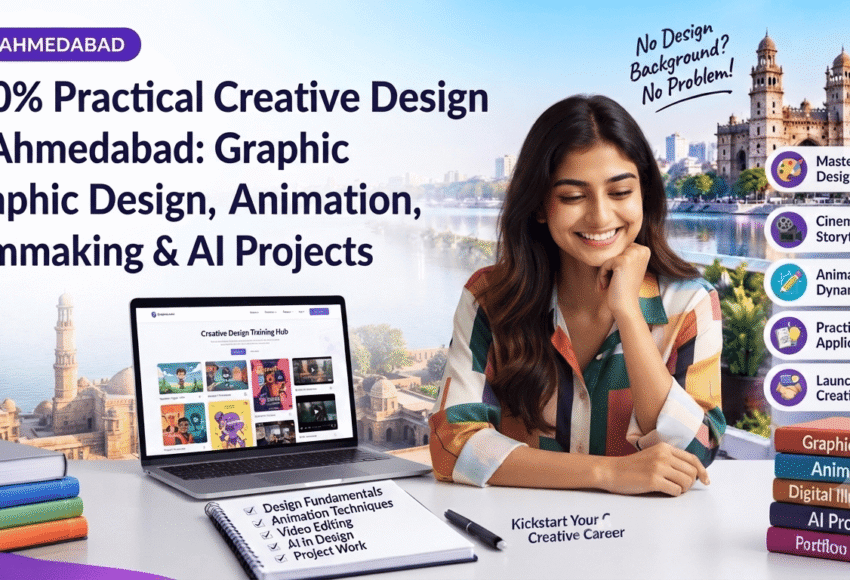
100% Practical Creative Design Training in Ahmedabad, Graphic Design, Animation, Filmmaking & AI Projects
Creative industries are changing rapidly with the combination of design, animation, filmmaking and artificial intelligence. Students and aspiring professionals are increasingly looking for practical creative design training in Ahmedabad that goes beyond classroom theory.
A practical creative program can help learners understand design principles, professional software, animation workflows, filmmaking techniques and AI-powered creative tools through hands-on projects.
This guide explains what practical creative design training includes, the major skills learners can develop, project-based learning opportunities, career options and what to check before selecting a creative training institute in Ahmedabad.
What Is Practical Creative Design Training?
Practical creative design training focuses on learning by doing rather than relying only on theoretical lessons.
Instead of simply studying design concepts, learners work on projects such as:
- Brand identity designs
- Social media creatives
- Posters and advertisements
- UI design concepts
- 2D and 3D animation projects
- Short films
- Video editing projects
- Motion graphics
- AI-generated creative concepts
- AI-assisted filmmaking projects
- Portfolio projects
The objective is to help learners understand how creative skills are applied to real-world assignments.
Why Choose Practical Creative Design Training in Ahmedabad?
Ahmedabad has a growing digital, advertising, media, education, startup and business ecosystem. Companies increasingly require visual content for websites, social media, advertising, branding, video platforms and digital campaigns.
For aspiring creative professionals, practical training can provide an opportunity to develop:
Creative thinking + Technical skills + Software knowledge + Project experience + Portfolio
This combination can be useful when applying for jobs, internships, freelance projects or building an independent creative career.
What Can You Learn in a Creative Design Program?
A comprehensive creative design program can combine several disciplines instead of focusing on just one software tool.
The learning path may include:
- Graphic Design
- Visual Communication
- Branding
- Animation
- Video Editing
- Filmmaking
- Motion Graphics
- Digital Content Creation
- AI-powered Design
- AI-assisted Video Creation
- Portfolio Development
The exact syllabus varies between institutes, so learners should review the current curriculum before enrolling.
Graphic Design Training
Graphic design is one of the fundamental areas of creative education.
Students can learn how to communicate ideas visually using typography, colour, images, layouts and branding elements.
Graphic Design Syllabus
A practical graphic design curriculum may include:
- Design principles
- Colour theory
- Typography
- Composition
- Layout design
- Logo design
- Brand identity
- Brochure design
- Poster design
- Advertisement design
- Social media creatives
- Packaging design
- Presentation design
- Image editing
- Adobe Photoshop
- Adobe Illustrator
- Adobe InDesign
- AI-assisted design workflows
Practical Graphic Design Projects
Students can work on projects such as:
- Logo and brand identity
- Restaurant branding
- Social media campaign
- Product advertisement
- Event poster
- Business brochure
- YouTube thumbnail
- Product packaging
These projects can later become part of a professional portfolio.
Animation Training
Animation allows designers and filmmakers to bring graphics, characters and visual elements to life.
Depending on the course, students may learn both fundamental animation concepts and digital production workflows.
Animation Syllabus
A practical animation program may cover:
- Animation principles
- Storyboarding
- Character concepts
- 2D animation
- Motion graphics
- Basic 3D concepts
- Visual effects
- Compositing
- Scene development
- Timing and movement
- Video editing
- Motion design software
Animation Projects
Students may create:
- Animated logos
- Explainer videos
- Character animation
- Motion graphics
- Short animated stories
- Product animations
- Social media animations
Filmmaking Training
Filmmaking combines storytelling, cinematography, sound, editing and visual communication.
Practical filmmaking training can introduce learners to the complete process of creating video content.
Filmmaking Syllabus
A course may include:
- Story development
- Script writing
- Storyboarding
- Shot composition
- Camera basics
- Lighting
- Cinematography
- Audio recording
- Video production
- Direction basics
- Video editing
- Colour correction
- Colour grading
- Post-production
- Short-film production
Practical Filmmaking Projects
Learners can create:
- Short films
- Promotional videos
- Product videos
- Brand films
- Documentary-style videos
- Social media videos
- YouTube videos
- Event videos
Project-based filmmaking allows students to experience multiple stages of production rather than only learning individual concepts.
AI Projects in Creative Design
Artificial intelligence is becoming part of modern creative workflows.
Rather than treating AI as a replacement for creative skills, practical training can teach students how to use AI as a creative and productivity tool.
AI for Graphic Design
AI can assist with:
- Creative ideation
- Concept development
- Image generation
- Background generation
- Image editing
- Design variations
- Content creation
- Creative research
AI for Filmmaking
AI-assisted filmmaking workflows can include:
- Story ideation
- Script development
- Storyboard concepts
- Visual concept generation
- AI video generation
- Voice generation
- Subtitle creation
- Video enhancement
- Editing assistance
AI Creative Projects
Students can experiment with projects such as:
- AI-generated advertising concepts
- AI-assisted product videos
- AI storytelling
- AI social media campaigns
- AI image-to-video projects
- AI filmmaking concepts
- AI-powered brand campaigns
Because AI tools change quickly, students should learn the underlying creative principles as well as the current tools.
What Does “100% Practical Training” Mean?
The phrase 100% practical training generally means that a significant part of learning is based on hands-on assignments and projects.
A genuinely practical program should ideally provide opportunities to:
Learn → Practice → Create → Receive Feedback → Improve → Build Portfolio
For example, instead of only learning the theory behind logo design, students can actually receive a fictional business brief and create a complete logo and brand identity.
Similarly, instead of only learning video editing tools, students can edit a complete short video from raw footage.
Example of a Practical Creative Project
A single integrated project could combine multiple creative skills.
Project: Create a Brand Campaign
Step 1: Develop a fictional brand concept
Step 2: Create the brand name and visual identity
Step 3: Design the logo
Step 4: Create social media posts
Step 5: Produce a promotional video
Step 6: Add motion graphics
Step 7: Use AI tools for creative variations
Step 8: Edit and finalize the video
Step 9: Prepare a presentation
Step 10: Add the completed work to the portfolio
This type of project helps learners understand how different creative skills can work together.
Software and Tools You May Learn
The exact tools depend on the institute and syllabus, but creative training may include software and platforms such as:
Graphic Design
- Adobe Photoshop
- Adobe Illustrator
- Adobe InDesign
UI and Digital Design
- Figma
- Prototyping tools
Video Editing
- Adobe Premiere Pro
- DaVinci Resolve or other editing software
Motion Graphics
- Adobe After Effects
3D and Animation
- Blender
- Other 3D and animation applications
AI Creative Tools
- AI image-generation tools
- AI video-generation tools
- AI writing and ideation tools
- AI voice and audio tools
The specific software list should be verified with the institute because tools and course syllabi can change.
Practical Projects vs Only Theoretical Learning
| Practical Training | Mainly Theoretical Training |
|---|---|
| Hands-on assignments | Mostly lectures |
| Realistic project briefs | Limited project work |
| Software practice | Concept-focused learning |
| Portfolio development | Certificate-focused |
| Feedback and revisions | Less opportunity to revise |
| Industry-style workflows | Classroom-focused exercises |
| Multiple creative projects | Fewer completed projects |
Practical learning does not eliminate the importance of theory. Strong creative professionals generally need both fundamental concepts and hands-on application.
Who Can Join Creative Design Training?
Practical creative training can be suitable for:
- Students after 10th or 12th
- College students
- Graduates
- Beginners
- Aspiring designers
- Video editors
- Content creators
- Freelancers
- Working professionals
- Entrepreneurs
- Social media professionals
- People looking to change careers
Eligibility requirements depend on the specific course and institute.
Career Opportunities After Creative Design Training
After developing practical skills and a portfolio, learners can explore roles such as:
Graphic Designer
Creates visual assets for brands, businesses, advertising and digital media.
Visual Designer
Works on visual communication and digital creative experiences.
Motion Graphics Designer
Creates animated graphics for videos, advertisements and digital content.
Video Editor
Edits videos for brands, social media, YouTube, advertising and other platforms.
Animator
Creates animated visual content using 2D or 3D workflows.
Filmmaking Professional
Can work in areas such as production, editing, cinematography or content creation depending on specialization.
AI Creative Professional
Uses AI-assisted tools alongside conventional design, video and creative skills.
Freelance Creative Professional
Can provide services such as graphic design, video editing, social media creatives, animation and AI-assisted content production.
Why Portfolio Projects Matter
A certificate can show that you completed a course, but a portfolio can demonstrate what you can actually create.
A creative portfolio may include:
- Logo projects
- Brand identity
- Posters
- Social media designs
- Advertising creatives
- Motion graphics
- Video editing projects
- Animation
- Short films
- AI-assisted creative projects
A well-organized portfolio can help during interviews, freelance proposals and client discussions.
How to Choose a Creative Design Training Institute in Ahmedabad
Before joining a course, compare the following factors.
Practical Project Structure
Ask how many projects students complete during the program.
Syllabus
Check whether the syllabus covers current creative workflows rather than only basic software commands.
Software Training
Check which professional tools are included.
AI Training
If AI is important to your career goal, check which AI workflows and tools are actually taught.
Portfolio Development
Ask whether students receive guidance on creating and presenting their portfolio.
Trainer Experience
Review the professional and teaching background of the trainers.
Classroom Projects
Ask whether projects are based on realistic briefs and industry-style assignments.
Feedback
Find out whether trainers review student work and provide opportunities for corrections.
Certification
Understand what certificate is provided and what it represents.
Career Support
If placement assistance is offered, ask about the specific services included.
Course Duration and Fees
Compare total duration, class hours, project work and fees rather than comparing price alone.
Creative Design Course in Ahmedabad: Skills Comparison
| Skill Area | Main Focus | Example Projects |
|---|---|---|
| Graphic Design | Visual communication | Branding, posters, social media |
| Animation | Movement and storytelling | Animated videos, motion graphics |
| Filmmaking | Video production | Short films, brand films |
| Video Editing | Post-production | YouTube videos, reels |
| AI Creative | AI-assisted workflows | AI images, videos, campaigns |
| Motion Graphics | Animated visual communication | Titles, advertisements, explainers |
Is Practical Creative Design Training Good for Beginners?
Yes, beginner-oriented programs can introduce learners to design fundamentals before moving into advanced projects.
A structured learning path can look like:
Fundamentals → Software → Small Exercises → Guided Projects → Advanced Projects → Portfolio
Beginners should focus on understanding concepts rather than trying to learn every creative software tool at once.
Can You Build a Career Using Multiple Creative Skills?
Yes. Combining complementary skills can create broader career opportunities.
For example:
Graphic Design + AI → AI-assisted visual content
Graphic Design + Motion Graphics → Animated social media content
Video Editing + AI → AI-assisted video production
Filmmaking + Editing → End-to-end video production
Graphic Design + Digital Marketing → Brand and social media creative production
The best combination depends on the type of work you want to pursue.
Frequently Asked Questions
What is practical creative design training in Ahmedabad?
Practical creative design training focuses on hands-on learning through design, animation, filmmaking, video and AI-based projects rather than relying only on theoretical lessons.
What is included in a creative design course?
Depending on the program, it may include Graphic Design, Animation, Video Editing, Filmmaking, Motion Graphics, AI tools, professional software and portfolio projects.
Is Graphic Design included in creative design training?
Many creative design programs include Graphic Design fundamentals such as typography, colour theory, branding, layout, image editing and professional design software.
Can I learn filmmaking and animation together?
Some integrated creative programs combine filmmaking, animation, video editing and motion graphics. The exact combination depends on the institute and course structure.
Are AI projects included in creative courses?
Some modern creative programs include AI-assisted design, image generation, video generation, content creation and creative ideation. Students should check the current syllabus for specific tools.
How important are practical projects?
Practical projects are important because they allow learners to apply concepts, practice software and create portfolio material.
Can beginners join a creative design course?
Yes. Beginner-focused programs can start with fundamentals before progressing to professional software and larger projects.
Can creative design skills help with freelancing?
Yes. Skills such as graphic design, video editing, animation, motion graphics and AI-assisted content creation can be offered as freelance services after sufficient practice and portfolio development.
What should I check before joining a creative institute in Ahmedabad?
Compare the syllabus, practical projects, course duration, fees, software, AI training, trainers, portfolio support, certification and career assistance.
Does a creative course guarantee a job?
No course can guarantee a job simply through enrollment. Career outcomes depend on factors such as skills, portfolio quality, experience, interview performance and the opportunities available in the market.