How Generative AI is Changing the Future of Design
The world of design is undergoing a massive transformation—and at the heart of this evolution is Generative AI. From creating logos and layouts to generating 3D models and personalized branding, generative AI is not just speeding up design workflows; it’s redefining creativity itself.
In this blog, we’ll explore how generative AI is changing the future of design, what tools are leading the charge, and how designers—beginners and professionals alike—can adapt and thrive in this new era.
What is Generative AI in Design?
Generative AI refers to artificial intelligence that can autonomously generate new content—images, text, video, music, and even code—by learning patterns from data. In design, generative AI tools can:
- Generate website and app layouts
- Create original illustrations or images
- Suggest color palettes and typography
- Auto-adjust design elements based on user input
- Assist in 3D modeling and animation
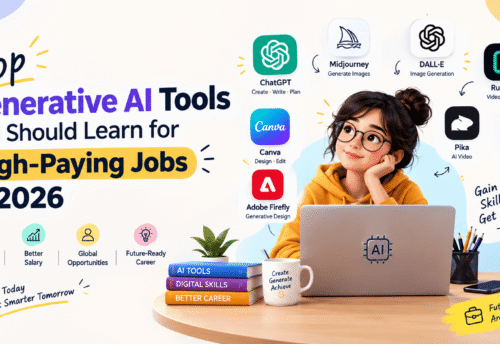
Tools like Adobe Firefly, DALL·E, Midjourney, and Runway ML are perfect examples of generative AI reshaping the design space.
1. Accelerating the Design Process
Traditionally, design is a time-consuming process that involves brainstorming, sketching, revising, and perfecting. With generative AI, designers can produce multiple variations of a concept within seconds. For example:
- Need 10 logo ideas? AI can generate them instantly.
- Want a quick mockup for a website? Just describe it, and AI will generate one.
This speed allows designers to iterate faster, meet deadlines more efficiently, and focus more on the creative vision than repetitive tasks.
2. Democratizing Design for Everyone
One of the biggest impacts of generative AI is that it makes design accessible to non-designers. With simple text prompts, anyone can create social media graphics, product mockups, or brand assets—even without technical skills.
This democratization is ideal for:
- Startups and small businesses
- Content creators
- Students and educators
You no longer need to master Photoshop or Illustrator to create high-quality visuals—AI can handle the technical side for you.
3. Boosting Creativity and Innovation
Instead of replacing creativity, generative AI amplifies it. Designers can explore new styles, compositions, and ideas that they might never have considered.
Imagine:
- Turning a hand-drawn sketch into a professional illustration
- Creating endless design variants with just one idea
- Combining styles from different eras or artists with a click
This “co-creation” between human and machine leads to fresh, unconventional ideas—expanding the creative boundaries of design.
4. Personalized and Adaptive Designs
Generative AI can customize designs based on user behavior, preferences, or even data inputs. This is especially powerful in areas like:
- UI/UX design: where AI adapts interfaces based on how users interact with an app or website.
- Marketing and advertising: where visuals and copy can be personalized for different audience segments.
- E-commerce: where AI can generate personalized product recommendations and display banners.
This kind of hyper-personalization results in better engagement and conversions.
5. 3D and Motion Design Made Easy
In the past, 3D modeling and motion graphics required expert-level software skills. But with generative AI, creating animations or 3D assets is now faster and easier.
Tools like Runway ML and Kaiber allow designers to:
- Turn images into animated video clips
- Generate 3D assets from sketches or prompts
- Apply styles and filters using AI
This opens up new creative opportunities for game designers, filmmakers, and AR/VR creators.
6. Designers as Creative Directors
Rather than eliminating the role of designers, AI is shifting their focus. Designers now become curators, editors, and creative directors who guide AI tools with strategic input and artistic direction.
This means:
- Less manual effort, more creative decision-making
- More time for innovation and storytelling
- The ability to manage larger-scale projects
The future designer will be someone who knows how to collaborate with AI to produce better, faster, and smarter results.
Challenges to Consider
While generative AI offers incredible potential, there are still a few concerns:
| Challenge | Impact | Solution |
| Originality and plagiarism | Risk of designs being too similar | Use AI as inspiration, not final output |
| Copyright issues | Who owns AI-generated content? | Use platforms with clear licensing |
| Job fears | AI replacing junior roles | Upskill to manage AI tools and add human creativity |
The Future of Design: Human + AI Collaboration
The future of design isn’t AI replacing humans—it’s humans working with AI. By combining human creativity with AI efficiency, we unlock a new level of design innovation that’s faster, smarter, and more inclusive.
Expect to see:
- AI-first design platforms
- Voice-to-design or text-to-design workflows
- Cross-disciplinary tools that blend art, code, and AI
- More AI-augmented roles in the creative industry
Final Thoughts
Generative AI is not just a tool—it’s a creative revolution. As it continues to evolve, it will empower a new generation of designers to think beyond boundaries, work more efficiently, and create like never before.
Whether you’re a graphic designer, UI/UX developer, video editor, or brand strategist, learning how to leverage AI in your workflow is not just optional—it’s essential.
So, embrace the change. The future of design is here—and it’s powered by generative AI.