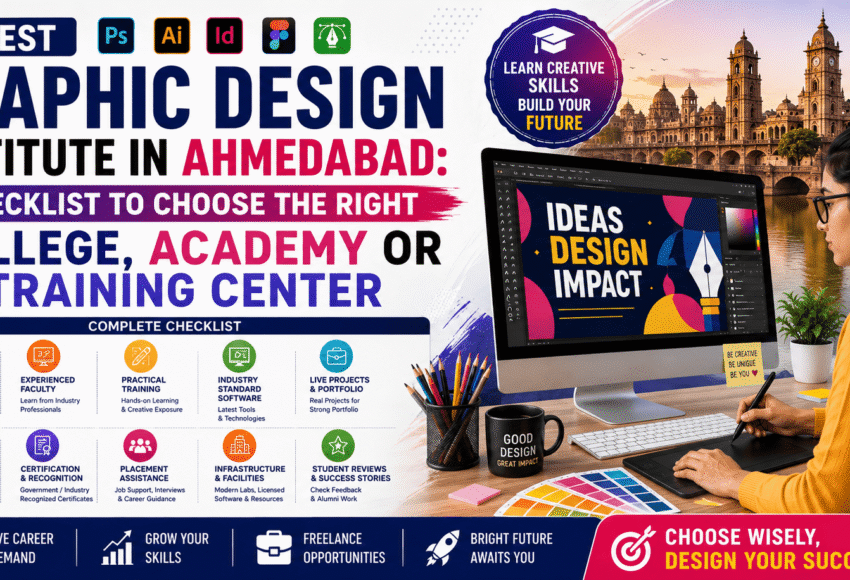
Best Graphic Design Institute in Ahmedabad: Checklist to Choose the Right College, Academy or Training Center (2026 Guide)
Graphic Design has become one of the fastest-growing creative careers in India. Every business, from startups and digital marketing agencies to multinational companies, requires skilled graphic designers to create impactful visuals, branding materials, advertisements, social media creatives, packaging, and digital content.
With the growing demand for designers, Ahmedabad has emerged as one of Gujarat’s leading destinations for creative education. However, selecting the right Graphic Design institute can be challenging because every college, academy, and training center claims to offer the best curriculum, practical training, certifications, and placement support.
This comprehensive guide will help you understand exactly what to look for before enrolling. Whether you’re a student after 12th, a graduate, a working professional, or someone planning a career switch, this checklist will help you choose a Graphic Design institute that aligns with your career goals.
Why Choosing the Right Graphic Design Institute Matters
A Graphic Design course is not just about learning design software. A quality institute develops your creativity, technical expertise, portfolio, communication skills, and industry readiness.
The right training institute helps you:
- Learn industry-standard software
- Build creative thinking skills
- Understand branding and visual communication
- Work on real-world projects
- Develop a professional portfolio
- Prepare for interviews and freelancing
- Become job-ready
Choosing an institute based only on low fees may not provide the practical exposure employers expect.
Why Ahmedabad is a Great Place to Learn Graphic Design
Ahmedabad is one of Gujarat’s fastest-growing business and technology hubs, offering excellent opportunities for aspiring designers.
Graphic Designers are hired by:
- Advertising Agencies
- Branding Companies
- IT Firms
- Digital Marketing Agencies
- E-commerce Businesses
- Printing & Packaging Industries
- Publishing Houses
- Media Companies
- Manufacturing Companies
- Startups
This growing ecosystem creates strong demand for skilled creative professionals.
Complete Checklist to Choose the Best Graphic Design Institute
1. Industry-Oriented Curriculum
The syllabus should be updated according to current industry trends and employer expectations.
A comprehensive curriculum should include:
- Design Fundamentals
- Color Theory
- Typography
- Layout Design
- Branding
- Print Design
- Digital Design
- Packaging Design
- Social Media Design
- Portfolio Development
- AI-assisted Design Tools
Avoid institutes with outdated or software-only training.
2. Industry-Standard Software Training
Professional Graphic Designers are expected to be proficient in the latest design applications.
The course should include:
- Adobe Photoshop
- Adobe Illustrator
- Adobe InDesign
- Canva
- Adobe Express
- Figma (Basic UI Design)
- AI-powered Creative Tools
Hands-on practice is essential for developing professional-level skills.
3. Experienced Faculty
Faculty quality directly influences your learning experience.
Experienced trainers help students:
- Understand design concepts
- Improve creativity
- Solve real design problems
- Review assignments
- Build portfolios
- Prepare for interviews
Learning from industry professionals provides practical insights that go beyond textbooks.
4. Practical Learning Approach
Graphic Design is a practical profession.
The institute should emphasize:
- Daily practical exercises
- Design assignments
- Client-based projects
- Creative workshops
- Portfolio reviews
- Live demonstrations
Practical learning builds confidence and improves job readiness.
5. Portfolio Development
Employers often evaluate your portfolio before your certificate.
A strong portfolio should include:
- Logo Design
- Brand Identity
- Social Media Creatives
- Brochures
- Flyers
- Packaging Design
- Posters
- Corporate Branding
- Advertising Campaigns
Choose an institute that provides dedicated portfolio mentoring.
6. Live Projects & Industry Exposure
Working on real projects helps students understand client expectations.
Examples include:
- Startup Branding
- Restaurant Branding
- Product Packaging
- Event Promotions
- Educational Campaigns
- Social Media Marketing Creatives
- Print Advertisements
Industry projects strengthen both skills and confidence.
7. Internship Opportunities
Internships allow students to:
- Apply classroom learning
- Build professional experience
- Improve communication
- Understand business workflows
- Strengthen their resume
- Expand their professional network
Institutes offering internship support provide an added advantage.
8. Certification
Before joining, check what type of certification is offered.
Common certifications include:
- Course Completion Certificate
- Professional Diploma
- Government-recognized Certification (where applicable)
- Industry Certification (if available)
Always verify the issuing authority and recognition of the certificate.
9. Placement Assistance
Career support is an important factor when selecting an institute.
Look for services such as:
- Resume Writing
- Portfolio Reviews
- Mock Interviews
- Career Counseling
- Internship Referrals
- Employer Connections
- Interview Preparation
While placement assistance can improve employability, job offers depend on your skills, portfolio, and interview performance.
10. Modern Infrastructure
A quality learning environment should include:
- High-performance computers
- Licensed design software
- Modern classrooms
- High-speed internet
- Projectors
- Practical labs
Professional infrastructure enhances the learning experience.
11. Flexible Learning Options
Many students and professionals require flexible schedules.
Check whether the institute offers:
- Weekday batches
- Weekend batches
- Fast-track programs
- Online Live Training
- Hybrid Learning
Flexibility allows learners to balance education with other commitments.
12. Student Reviews & Success Stories
Before enrolling:
- Read verified reviews
- Explore alumni portfolios
- Check placement stories
- Review student testimonials
- Evaluate project quality
Balanced feedback provides valuable insights into the institute’s teaching quality.
13. Demo Classes
A demo class helps you evaluate:
- Teaching style
- Faculty expertise
- Practical approach
- Classroom environment
- Student interaction
Attending a demo session can help you make an informed decision.
What Should a Modern Graphic Design Course Include?
A professional curriculum should cover:
Design Fundamentals
- Design Principles
- Typography
- Color Theory
- Composition
- Visual Hierarchy
Software Training
- Adobe Photoshop
- Adobe Illustrator
- Adobe InDesign
- Canva
- Adobe Express
- Figma Basics
Advanced Modules
- Branding
- Packaging Design
- Print Media
- Digital Marketing Creatives
- Portfolio Development
- AI-powered Design Workflows
Essential Skills You’ll Learn
A quality institute helps students master:
- Creative Thinking
- Visual Communication
- Typography
- Branding
- Logo Design
- Layout Design
- Color Psychology
- Photo Editing
- Packaging Design
- Social Media Design
- Client Communication
- Time Management
- Presentation Skills
Course Duration
| Program | Duration |
|---|---|
| Certificate Course | 2–3 Months |
| Professional Course | 4–6 Months |
| Advanced Diploma | 6–12 Months |
Weekend, weekday, and fast-track batches are generally available.
Graphic Design Course Fees in Ahmedabad
Approximate fee ranges:
| Course Type | Estimated Fees |
|---|---|
| Certificate Course | ₹15,000–₹30,000 |
| Professional Course | ₹30,000–₹60,000 |
| Advanced Diploma | ₹60,000–₹1,00,000+ |
When comparing fees, consider curriculum quality, faculty, software training, projects, internships, and career support instead of choosing solely based on cost.
Career Opportunities
After completing Graphic Design training, you can work as:
- Graphic Designer
- Brand Designer
- Visual Designer
- Creative Designer
- Packaging Designer
- Print Designer
- Advertising Designer
- Marketing Designer
- Social Media Designer
- Junior UI Designer (with additional UI/UX skills)
Freelancing, entrepreneurship, and remote work opportunities are also expanding.
Salary Expectations in India
| Experience | Average Salary |
|---|---|
| Fresher | ₹2.5–₹5 LPA |
| 2–5 Years | ₹5–₹9 LPA |
| Senior Designer | ₹9–₹18+ LPA |
Professionals with strong portfolios, specialization, and international freelance clients can earn significantly more.
Why Practical Training Matters More Than Certificates
Certificates demonstrate course completion, but employers primarily assess:
- Portfolio quality
- Creativity
- Software proficiency
- Problem-solving ability
- Design thinking
- Communication skills
- Real-world project experience
A project-based learning approach gives students a competitive advantage in the job market.
Future Scope of Graphic Design
Graphic Design continues to evolve with technology and AI. Skilled designers are increasingly required in:
- Branding
- Digital Marketing
- UI/UX Design
- Motion Graphics
- Website Design
- E-commerce
- AI-assisted Content Creation
- Advertising
- Product Design
- Social Media Marketing
Professionals who combine Graphic Design with UI/UX, Digital Marketing, and Generative AI skills are likely to have broader career opportunities.
Frequently Asked Questions (FAQs)
1. How do I choose the best Graphic Design institute in Ahmedabad?
Evaluate institutes based on curriculum, faculty, software training, practical projects, portfolio development, internships, certification, and placement support.
2. Is a training institute better than a college for Graphic Design?
It depends on your career goals. Colleges generally offer broader academic education, while professional training institutes often focus more on practical, industry-oriented skills.
3. Which software should I learn?
A modern Graphic Design course should include Adobe Photoshop, Illustrator, InDesign, Canva, Adobe Express, Figma (basic), and AI-assisted design tools.
4. How important is practical training?
Practical assignments, live projects, and portfolio development are essential for becoming job-ready and showcasing your skills to employers.
5. Does placement assistance guarantee a job?
No. Placement assistance supports your job search through career services, but hiring depends on your skills, portfolio, and interview performance.
6. Can beginners join a Graphic Design course?
Yes. Most Graphic Design courses are designed for beginners, including students after 10th or 12th, graduates, and working professionals.
7. Is a portfolio more important than a certificate?
In many hiring processes, a well-developed portfolio has a greater impact because it demonstrates your practical skills and creativity.
8. What is the average course duration?
Depending on the programme, Graphic Design courses usually range from 2 months to 12 months.
9. Can I freelance after completing the course?
Yes. Graphic Design offers excellent freelance opportunities with startups, agencies, local businesses, and international clients.
10. Is Graphic Design still a good career in 2026?
Yes. As businesses continue to invest in branding, digital marketing, and online presence, the demand for skilled Graphic Designers remains strong.
Conclusion
Choosing the best Graphic Design institute in Ahmedabad is an important step toward building a successful creative career. Instead of selecting an institute based solely on marketing claims or fees, evaluate factors such as curriculum, experienced faculty, practical training, software coverage, portfolio development, internships, certifications, and career support.
A high-quality Graphic Design programme should prepare you for real-world challenges through hands-on projects, industry-standard tools, and professional guidance. By investing in the right training, you’ll gain the confidence, creativity, and technical expertise needed to succeed in branding, advertising, digital marketing, publishing, IT, and freelance design careers.