Government Certificate Graphic Design Course in Ahmedabad: Benefits, Eligibility & Career Scope
Graphic design has become one of the fastest-growing creative professions in India, with businesses increasingly relying on visual communication to strengthen their brand identity and digital presence. From social media campaigns and website graphics to product packaging and advertising, skilled graphic designers are in demand across almost every industry.
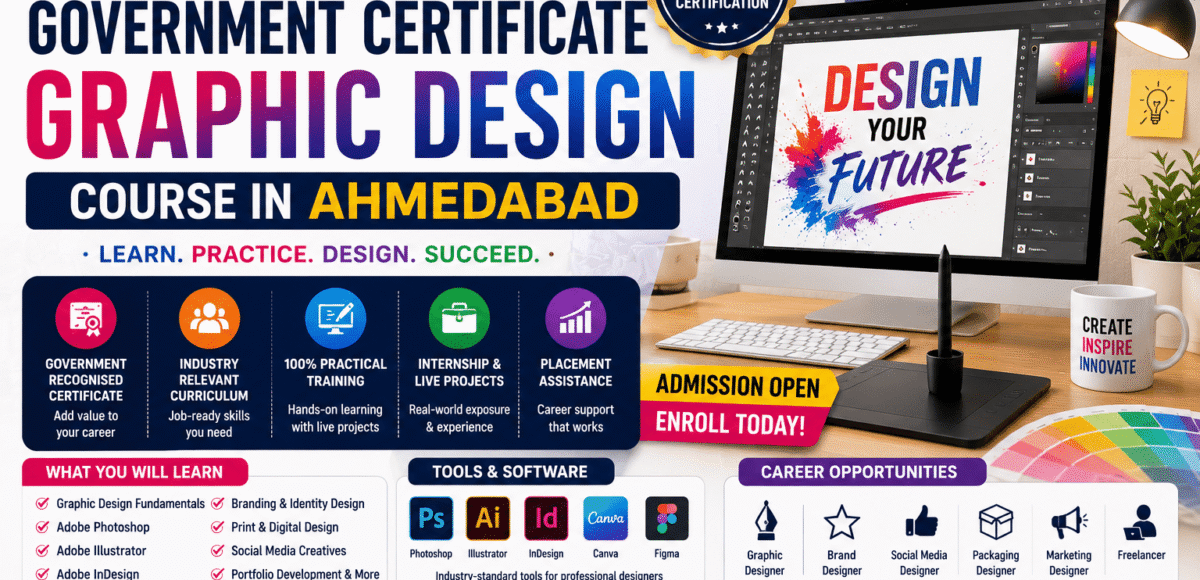
If you’re searching for a Government Certificate Graphic Design Course in Ahmedabad, it’s important to understand what a government-recognised certification can offer alongside practical training. A quality course should combine industry-standard software, live projects, portfolio development, internship opportunities, and structured placement assistance to prepare students for real-world careers.
This guide explains the benefits of a Government Certificate Graphic Design Course, eligibility, syllabus, fees, career opportunities, salary expectations, certification value, and how to choose the best training institute in Ahmedabad.
Why Graphic Design is a High-Demand Career in 2026
As businesses continue to invest in digital transformation, the demand for professional graphic designers is increasing across sectors.
Graphic designers help organisations create:
- Brand identities
- Logos
- Social media creatives
- Digital advertisements
- Product packaging
- Brochures
- Website graphics
- Marketing materials
- Infographics
- Corporate presentations
The rise of AI-assisted design tools has improved workflow efficiency, but creativity, branding expertise, and design thinking remain essential skills.
What is a Government Certificate Graphic Design Course?
A Government Certificate Graphic Design Course is a structured training programme that provides students with practical design skills while awarding a certificate recognised under the framework of the issuing government body or approved institution.
Such programmes generally focus on:
- Graphic Design Fundamentals
- Adobe Creative Suite
- Branding
- Print Design
- Digital Design
- Portfolio Development
- Industry Projects
- Career Preparation
A recognised certificate can strengthen your profile, but employers primarily assess your practical skills, portfolio, and problem-solving ability.
Benefits of a Government Certificate Graphic Design Course
Choosing a recognised certification programme offers several advantages.
1. Industry-Relevant Skills
Students learn practical design techniques used in advertising agencies, IT companies, digital marketing firms, and creative studios.
2. Recognised Certification
A government-recognised certificate can add credibility to your resume and may be beneficial when applying for jobs where recognised qualifications are preferred.
3. Practical Learning
The best institutes combine theory with:
- Live Projects
- Case Studies
- Portfolio Development
- Creative Assignments
- Client-Based Projects
4. Better Career Readiness
Students develop skills in:
- Creative Thinking
- Visual Communication
- Branding
- Client Communication
- Presentation Skills
- Project Management
5. Portfolio Development
A professional portfolio helps demonstrate your abilities to recruiters and freelance clients.
Typical portfolio projects include:
- Logo Design
- Brand Identity
- Social Media Campaigns
- Packaging Design
- Print Advertisements
- Marketing Materials
Why Choose Ahmedabad for Graphic Design Training?
Ahmedabad has become one of Gujarat’s leading centres for education, technology, startups, and creative industries.
Students benefit from opportunities in:
- Digital Marketing Agencies
- Advertising Companies
- Branding Studios
- IT Firms
- E-commerce Businesses
- Publishing Houses
- Printing Industries
- Media Organisations
- Manufacturing Companies
- Startup Ecosystem
This growing market creates consistent demand for skilled graphic designers.
Eligibility
Most Government Certificate Graphic Design courses are suitable for:
- Students after 10th
- Students after 12th
- Diploma Holders
- College Students
- Graduates
- Working Professionals
- Freelancers
- Entrepreneurs
Basic computer knowledge is usually sufficient.
Graphic Design Course Duration
Course duration varies depending on the programme.
| Programme | Duration |
|---|---|
| Certificate Course | 2–3 Months |
| Professional Course | 4–6 Months |
| Advanced Diploma | 6–12 Months |
Many institutes also offer weekend, weekday, and fast-track batches.
Graphic Design Course Fees in Ahmedabad
Approximate fee ranges:
| Course Type | Average Fees |
|---|---|
| Certificate Course | ₹15,000–₹30,000 |
| Professional Programme | ₹30,000–₹60,000 |
| Advanced Diploma | ₹60,000–₹1,00,000+ |
When evaluating a course, consider curriculum quality, practical exposure, faculty expertise, and placement support in addition to fees.
Graphic Design Course Syllabus
A comprehensive Graphic Design programme generally includes:
Module 1: Design Fundamentals
Learn:
- Elements of Design
- Principles of Design
- Colour Theory
- Typography
- Visual Hierarchy
- Composition
- Layout Design
Module 2: Adobe Photoshop
Topics include:
- Photo Editing
- Image Retouching
- Background Removal
- Poster Design
- Advertisement Design
- Social Media Graphics
- Photo Manipulation
Module 3: Adobe Illustrator
Students create:
- Logos
- Brand Identity
- Vector Graphics
- Icons
- Packaging Designs
- Infographics
Module 4: Adobe InDesign
Learn:
- Magazine Layout
- Brochure Design
- Catalogue Design
- Print Publications
- Corporate Documents
Module 5: Branding & Marketing Design
Projects include:
- Business Cards
- Letterheads
- Flyers
- Posters
- Packaging
- Marketing Campaigns
- Corporate Branding
Module 6: Digital Design
Students design:
- Instagram Posts
- Facebook Advertisements
- LinkedIn Graphics
- YouTube Thumbnails
- Website Banners
- Display Advertisements
Module 7: Portfolio Development
Students build a professional portfolio featuring:
- Branding Projects
- Print Designs
- Digital Campaigns
- Marketing Materials
- Packaging Concepts
- Creative Case Studies
Module 8: AI-Assisted Design Workflow
Modern Graphic Design programmes increasingly introduce AI-powered tools for:
- Image enhancement
- Background removal
- Creative ideation
- Layout suggestions
- Workflow optimisation
These tools improve productivity while reinforcing the importance of original creative thinking.
Software You’ll Learn
Professional institutes typically provide training in:
- Adobe Photoshop
- Adobe Illustrator
- Adobe InDesign
- Canva
- Adobe Express
- Figma (Basics)
- AI-assisted creative tools
Practical Projects
Students gain hands-on experience through projects such as:
- Logo Design
- Brand Identity Systems
- Packaging Design
- Brochures
- Posters
- Social Media Campaigns
- Product Catalogues
- Corporate Presentations
- Digital Advertisements
Practical projects help students build job-ready portfolios.
Certification
Most institutes award:
- Government-recognised Certificate (where applicable)
- Course Completion Certificate
- Professional Diploma (for advanced programmes)
Before enrolling, verify the issuing authority, recognition status, and whether the certification aligns with your career goals.
Internship Opportunities
Institutes offering internships enable students to:
- Work on real client projects
- Gain practical industry experience
- Understand professional workflows
- Improve communication skills
- Build stronger portfolios
- Enhance employability
Placement Assistance
Many Graphic Design institutes provide career support through:
- Resume Building
- Portfolio Reviews
- Mock Interviews
- Career Counselling
- Interview Preparation
- Internship Referrals
- Employer Connections
Placement assistance supports your job search, while final employment depends on your skills, portfolio, and interview performance.
Career Opportunities After Certification
After completing a Government Certificate Graphic Design Course, you can pursue roles such as:
- Graphic Designer
- Visual Designer
- Brand Designer
- Creative Designer
- Packaging Designer
- Marketing Designer
- Social Media Designer
- Print Designer
- Advertising Designer
- Junior UI Designer (with additional UI/UX skills)
Freelancing and entrepreneurship are also excellent career options.
Salary After Graphic Design Course
Typical salary ranges in India:
| Experience | Average Salary |
|---|---|
| Fresher | ₹2.5–₹4.5 LPA |
| 2–5 Years | ₹4–₹8 LPA |
| Senior Designer | ₹8–₹15+ LPA |
Freelancers and specialists serving international clients may earn significantly higher incomes based on their expertise and project portfolio.
Industries Hiring Graphic Designers
Qualified Graphic Designers are recruited by:
- Advertising Agencies
- Branding Consultancies
- Digital Marketing Companies
- IT Firms
- E-commerce Businesses
- Publishing Companies
- Printing & Packaging Industries
- Media Houses
- Educational Institutions
- Corporate Marketing Departments
How to Choose the Best Government Certificate Graphic Design Institute in Ahmedabad
Before enrolling, evaluate the institute based on:
- Government-recognised certification (where applicable)
- Updated industry curriculum
- Experienced faculty
- Practical training
- Live projects
- Portfolio development
- Internship opportunities
- Placement assistance
- Modern infrastructure
- Student reviews
- Demo classes
Choose an institute that balances recognised certification with practical, career-focused learning.
Why Practical Skills Matter More Than Certificates Alone
A recognised certificate can enhance your credentials, but employers usually prioritise:
- Design quality
- Portfolio strength
- Creativity
- Software proficiency
- Problem-solving skills
- Communication
- Professional attitude
Practical experience and continuous learning are essential for long-term career success.
Frequently Asked Questions (FAQs)
1. What is a Government Certificate Graphic Design Course?
It is a Graphic Design training programme that awards a certificate recognised by the relevant government body or approved institution, alongside practical design education.
2. Who can join this course?
Students after 10th or 12th, graduates, diploma holders, working professionals, freelancers, and entrepreneurs can generally enrol.
3. Which software will I learn?
Professional programmes commonly include Adobe Photoshop, Illustrator, InDesign, Canva, Adobe Express, Figma (basics), and AI-assisted design tools.
4. Is Graphic Design a good career in 2026?
Yes. Graphic Design continues to offer strong career opportunities across advertising, branding, digital marketing, IT, publishing, and e-commerce.
5. Does a government-recognised certificate guarantee a job?
No. A recognised certificate can strengthen your resume, but employment depends on your practical skills, portfolio, communication, and interview performance.
6. Will I work on live projects?
Many quality institutes include live projects, practical assignments, and portfolio development as part of the course.
7. Can I freelance after completing the course?
Yes. Many Graphic Designers work independently with businesses, startups, agencies, and international clients.
8. How long does the course take?
Depending on the programme, Graphic Design courses generally last between 2 months and 12 months.
9. Do I need drawing skills?
No. Creativity, design thinking, and proficiency with design software are more important than traditional drawing skills.
10. What should I check before joining a Graphic Design institute?
Review the curriculum, software training, faculty expertise, portfolio support, internship opportunities, certification recognition, and placement assistance before making a decision.
Conclusion
A Government Certificate Graphic Design Course in Ahmedabad can be an excellent choice for students and professionals seeking a recognised qualification combined with practical design training. While certification can enhance your professional profile, lasting career success comes from developing strong creative skills, mastering industry-standard software, building an impressive portfolio, and gaining real-world project experience.
Whether your goal is to work in branding, advertising, digital marketing, publishing, IT, or freelancing, choosing a training institute that emphasises hands-on learning, internships, portfolio development, and career support will help you become job-ready. By investing in both recognised certification and practical expertise, you can build a rewarding and future-focused career in the rapidly growing design industry.