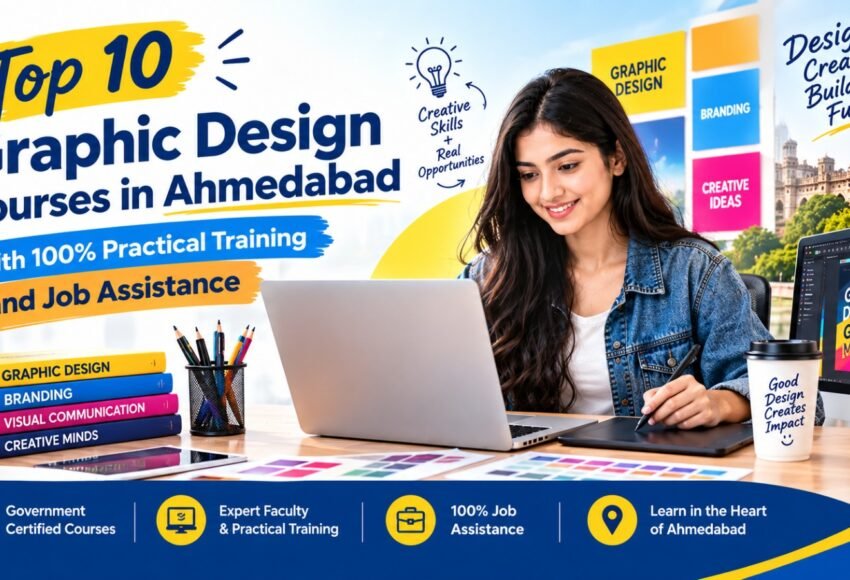
Top 10 Graphic Design Courses in Ahmedabad with 100% Practical Training and Job Assistance
Graphic Design is one of the popular creative skills for students, graduates, freelancers and professionals interested in digital media and visual communication. From social media creatives and advertisements to branding, websites and marketing materials, businesses use graphic design across many areas.
For students searching for a Graphic Design course in Ahmedabad, there are many options available. However, choosing a course only because it has a low fee or promises job assistance may not be enough.
A practical course should help learners understand design principles, use professional software, complete projects and build a portfolio.
This guide explores 10 types of Graphic Design courses and training options to consider in Ahmedabad, along with their typical focus, skills, practical components, career relevance and factors to check before admission.
Top 10 Graphic Design Courses in Ahmedabad with 100% Practical Training and Job Assistance
Introduction
A good design can communicate an idea before a person even reads the text.
A logo can create brand recognition. A social media post can attract attention. A well-designed advertisement can communicate an offer quickly. A website banner can influence how a visitor perceives a business.
Behind these visuals are Graphic Designers who combine creativity, design principles and technical skills.
If you are planning to build a career in the creative industry, joining a Graphic Design course can give you structured learning and practical experience.
Ahmedabad has several options for learning Graphic Design, but courses can differ considerably in syllabus, duration, software, practical training, fees and career support.
So, what should you look for?
Let’s explore the major types of Graphic Design courses that students can consider.
1. Comprehensive Graphic Design Course
A comprehensive Graphic Design course is designed to cover the field from fundamentals to practical projects.
Common Topics
- Design fundamentals
- Colour theory
- Typography
- Composition
- Layout
- Image editing
- Vector graphics
- Branding
- Logo design
- Poster design
- Social media creatives
- Advertising design
- Print design
- Digital design
Practical Training
Students can work on projects such as:
- Logo concepts
- Brand identity
- Posters
- Social media campaigns
- Marketing banners
- Brochures
- Business cards
Suitable For
- Beginners
- College students
- Graduates
- Career changers
- Aspiring freelancers
This type of course can be useful for learners who want a broad foundation rather than learning only one software tool.
2. Graphic Design and Branding Course
Branding is an important area of Graphic Design.
A branding-focused course can teach students how to create a consistent visual identity for a business.
Topics May Include
- Logo design
- Brand colours
- Typography
- Brand guidelines
- Stationery design
- Packaging concepts
- Marketing materials
- Visual identity
Practical Projects
Students may create a complete identity for a fictional or real-world-style brand.
For example:
Business name → Logo → Colour palette → Typography → Business card → Social media → Brand guideline
This type of project can become a strong portfolio piece.
3. Digital Graphic Design Course
Digital content is now used across websites, social media platforms, advertising campaigns and online businesses.
A digital Graphic Design course can focus on creating visuals specifically for online platforms.
Students May Learn
- Social media post design
- Digital advertisements
- Web banners
- Promotional creatives
- Campaign visuals
- Thumbnail design
- Digital branding
- Content layouts
Practical Training
Learners can create a complete digital campaign with multiple creative formats.
This can help them understand how one visual identity can be adapted across different digital platforms.
4. Graphic Design with UI Design
Students interested in both visual communication and digital interfaces can consider a course that combines Graphic Design with UI Design.
Graphic Design Topics
- Typography
- Colour
- Composition
- Branding
- Visual hierarchy
UI Topics
- Website interfaces
- Mobile application screens
- Navigation
- Components
- Layouts
- Responsive design
- Design systems
Practical Projects
Students could work on:
- Website landing pages
- Mobile app screens
- Dashboard interfaces
- E-commerce pages
This combination can expose learners to both traditional visual design and digital interface design.
5. Graphic Design and UI/UX Design Course
A combined Graphic Design and UI/UX course provides a broader learning path.
It may include:
Graphic Design
- Design fundamentals
- Branding
- Logo design
- Digital creatives
- Typography
- Colour theory
UI Design
- Interface design
- Components
- Visual hierarchy
- Responsive layouts
UX Design
- User research
- Personas
- User journeys
- User flows
- Wireframes
- Prototypes
- Usability
Practical Projects
Students can create a complete project such as:
Research → User Flow → Wireframe → UI Design → Prototype → Case Study
This can be particularly useful for students interested in digital products and websites.
6. Graphic Design and Motion Graphics Course
For students interested in animated visual content, a Graphic Design course with Motion Graphics can provide an additional skill set.
Topics May Include
- Graphic composition
- Visual storytelling
- Motion principles
- Animated text
- Transitions
- Digital advertisements
- Short promotional videos
Practical Projects
Students can create:
- Animated social media posts
- Promotional videos
- Logo animations
- Short advertisements
- Motion-based presentations
This combination can be useful for learners interested in advertising, social media and digital content creation.
7. Graphic Design and Video Editing Course
Graphic Design and video editing can complement each other in digital content production.
A combined course may cover:
Graphic Design
- Social media creatives
- Posters
- Branding
- Digital advertisements
Video Editing
- Video cutting
- Transitions
- Text overlays
- Audio
- Visual effects
- Social media video formats
Practical Projects
Students can create a complete digital campaign containing both static graphics and short-form videos.
This can be useful for learners interested in social media marketing, advertising agencies and digital content production.
8. Advanced Graphic Design Course
Students who already understand the basics can explore advanced training.
Advanced courses may focus on:
- Advanced branding
- Creative campaigns
- Advanced composition
- Art direction fundamentals
- Digital advertising
- Packaging
- Advanced typography
- Portfolio development
Practical Training
Students can work on more complex projects instead of only individual designs.
For example:
Brand Brief → Research → Concept → Design Direction → Campaign → Final Presentation
Advanced projects can help learners practise handling design requirements more professionally.
9. Graphic Design Course for Freelancing
Students who want to work independently can look for training that combines design skills with basic freelancing knowledge.
Along with Graphic Design, such training may cover:
- Portfolio development
- Client communication
- Understanding a design brief
- Project presentation
- Revisions
- Pricing basics
- File delivery
- Professional communication
The design skills remain the foundation, while the additional topics can help students understand how client-based projects work.
10. Graphic Design Course with Portfolio and Career Training
Another option is a career-focused Graphic Design course that combines technical learning with portfolio and job preparation.
Possible Components
- Design fundamentals
- Software training
- Branding
- Digital creatives
- Practical assignments
- Portfolio projects
- Resume preparation
- Interview preparation
- Presentation skills
- Career guidance
This approach can be useful for students whose main goal is to prepare for internships or entry-level design roles.
What Does “100% Practical Training” Actually Mean?
The phrase 100% practical training can mean different things depending on the institute.
Before joining a course, ask what practical training actually includes.
Ideally, practical learning should involve:
- Instructor demonstrations
- Hands-on software practice
- Individual assignments
- Design briefs
- Real-world-style projects
- Trainer feedback
- Project revisions
- Portfolio development
Simply watching a trainer create a design is not the same as creating it yourself.
The more opportunities you have to design, receive feedback, correct mistakes and redesign, the more useful the practical learning experience can become.
What Should Be Included in a Graphic Design Course Syllabus?
A well-rounded syllabus can include the following areas.
Design Fundamentals
- Elements of design
- Principles of design
- Colour theory
- Typography
- Composition
- Grids
- Alignment
- Contrast
- Visual hierarchy
Digital Design
- Social media creatives
- Digital advertisements
- Web banners
- Marketing graphics
Branding
- Logo design
- Brand identity
- Colour systems
- Typography systems
- Brand guidelines
Print Design
- Brochures
- Flyers
- Posters
- Business cards
- Print-ready files
Portfolio
- Project presentation
- Case studies
- Design explanations
- Portfolio organisation
Graphic Design Course Fees in Ahmedabad
There is no single fee applicable to every Graphic Design course in Ahmedabad.
Fees can vary depending on:
- Course duration
- Number of modules
- Software included
- Classroom or online format
- Practical training
- Projects
- Portfolio support
- Certification
- Trainer support
- Career assistance
Compare More Than the Fee
| Course Factor | What to Check |
|---|---|
| Fees | Total cost and payment structure |
| Duration | Number of weeks/months and training hours |
| Syllabus | Skills and subjects covered |
| Practical Work | Number and type of projects |
| Software | Tools included in training |
| Portfolio | Whether projects are portfolio-ready |
| Certificate | Type and issuing organisation |
| Career Support | Exact assistance provided |
| Batch Size | Individual attention available |
| Timings | Weekday/weekend flexibility |
Always verify the latest fees and inclusions directly with the institute, because course structures can change.
Career Opportunities After a Graphic Design Course
Graphic Design can lead to different creative roles depending on your skills and portfolio.
Graphic Designer
Creates visual communication materials for brands and businesses.
Visual Designer
Works on visual systems and digital experiences.
Brand Designer
Focuses on brand identity and visual consistency.
Social Media Designer
Creates digital graphics for social media campaigns.
Marketing Designer
Develops visual materials for marketing and advertising.
Web Designer
Works on the visual design and layout of websites.
UI Designer
Creates interfaces for websites and digital products.
Motion Graphic Designer
Creates animated visual content.
Freelance Graphic Designer
Works independently with clients and businesses.
Why Portfolio Matters More Than Just a Certificate
A certificate tells an employer that you completed a course.
A portfolio shows what you can actually create.
For example, instead of simply saying:
“I know branding.”
You can show:
- Logo
- Colour palette
- Typography
- Brand guidelines
- Social media creatives
- Business stationery
Similarly, instead of saying:
“I know UI design.”
You can show:
- Wireframes
- Website screens
- Mobile screens
- Components
- Prototype
- UX case study
This is why practical projects should be an important part of your course.
What Does Job Assistance Mean?
Job assistance and job placement should not automatically be treated as the same thing.
Job assistance may include:
- Resume preparation
- Interview preparation
- Portfolio guidance
- Job alerts
- Interview opportunities
- Employer connections
- Career counselling
Students should ask the institute exactly what support is provided.
Questions you can ask include:
- Do you provide interview preparation?
- Is resume preparation included?
- Are internship opportunities available?
- How are job openings shared?
- Does the institute coordinate interviews?
- Are there any eligibility conditions?
- Is job assistance available after course completion?
This helps you understand what “job assistance” means before enrolling.
Who Can Join a Graphic Design Course?
Graphic Design courses can be suitable for:
- 12th-pass students
- College students
- Graduates
- Working professionals
- Freelancers
- Digital marketing learners
- Business owners
- Creative enthusiasts
- Career changers
Beginners do not necessarily need advanced drawing skills.
A willingness to practise and learn visual communication is a good starting point.
How to Choose the Right Graphic Design Course in Ahmedabad
Before paying the course fee, consider this checklist:
1. Review the Syllabus
Make sure the syllabus matches your career goal.
2. Check Practical Projects
Ask how many assignments and projects are included.
3. Review Student Work
Look at previous student portfolios when available.
4. Check Software Training
Confirm which design tools are included.
5. Ask About Portfolio Development
Find out whether you will receive guidance on presenting your projects.
6. Understand Certification
Ask who issues the certificate and what it represents.
7. Clarify Job Assistance
Understand exactly what career support is included.
8. Compare Course Fees
Compare the complete course package rather than only the advertised fee.
9. Check Batch Timings
Choose timings that fit your schedule.
10. Attend a Demo Session
If available, a demo class can help you understand the teaching approach before admission.
Graphic Design Learning Roadmap for Beginners
A simple learning path can be:
Step 1: Learn design fundamentals
↓
Step 2: Understand typography and colour
↓
Step 3: Learn professional design software
↓
Step 4: Create basic design projects
↓
Step 5: Learn branding and digital design
↓
Step 6: Work on real-world-style assignments
↓
Step 7: Build a portfolio
↓
Step 8: Improve presentation and communication
↓
Step 9: Prepare for interviews or freelance work
↓
Step 10: Continue learning advanced design techniques
FAQs
1. Which Graphic Design course is suitable for beginners in Ahmedabad?
A beginner-friendly course should start with design fundamentals and gradually introduce software, branding, digital design and practical projects.
2. How much does a Graphic Design course cost in Ahmedabad?
Fees vary according to course duration, syllabus, software, practical training, certification and other facilities. Check the current fee structure directly with the institute.
3. Is Graphic Design difficult to learn?
The fundamentals can be learned by beginners, but becoming proficient requires regular practice, feedback and portfolio development.
4. Do Graphic Design courses include practical training?
Many courses include practical assignments and projects, but the amount of hands-on training differs. Ask the institute about the exact practical components before enrolling.
5. What software is used in Graphic Design?
Professional Graphic Design commonly involves image-editing, vector-design, layout and illustration tools. The exact software included depends on the course syllabus.
6. Can I learn Graphic Design after 12th?
Yes. Many beginner-level Graphic Design courses can be started after completing 12th standard, subject to the institute’s eligibility requirements.
7. Can Graphic Design lead to a career in UI/UX?
Graphic Design provides useful foundations such as typography, colour, composition and visual hierarchy. Additional UI/UX training is generally needed to learn UX research, wireframing, user flows and prototyping.
8. Does job assistance guarantee a job?
No. Job assistance and job placement are different concepts. Employment depends on factors such as skills, portfolio, interview performance, experience and employer requirements.
9. Is a certificate important for a Graphic Designer?
A certificate can demonstrate course completion, but employers may also evaluate practical skills and portfolio quality.
10. Can I become a freelance Graphic Designer after completing a course?
Yes. Freelancing is one possible career path. Along with design skills, freelancers need portfolio development, client communication, project management and professional presentation skills.
Conclusion
Choosing a Graphic Design course in Ahmedabad is an important step for anyone interested in a creative and digital career.
The top 10 course categories discussed in this guide cover different learning goals—from comprehensive Graphic Design and branding to digital design, UI/UX, motion graphics, video editing, advanced design and career-focused training.
When comparing institutes, don’t focus only on phrases such as “100% practical training” or “job assistance.” Look at what those promises actually include.
Check the syllabus, practical projects, software training, trainer support, portfolio development, certification, fees, course duration and career assistance.
Most importantly, choose a learning path that gives you opportunities to practise and build a portfolio.
For an aspiring designer, the combination of strong fundamentals + software skills + practical projects + portfolio development + continuous practice can provide a solid foundation for exploring Graphic Design career opportunities in Ahmedabad and beyond.